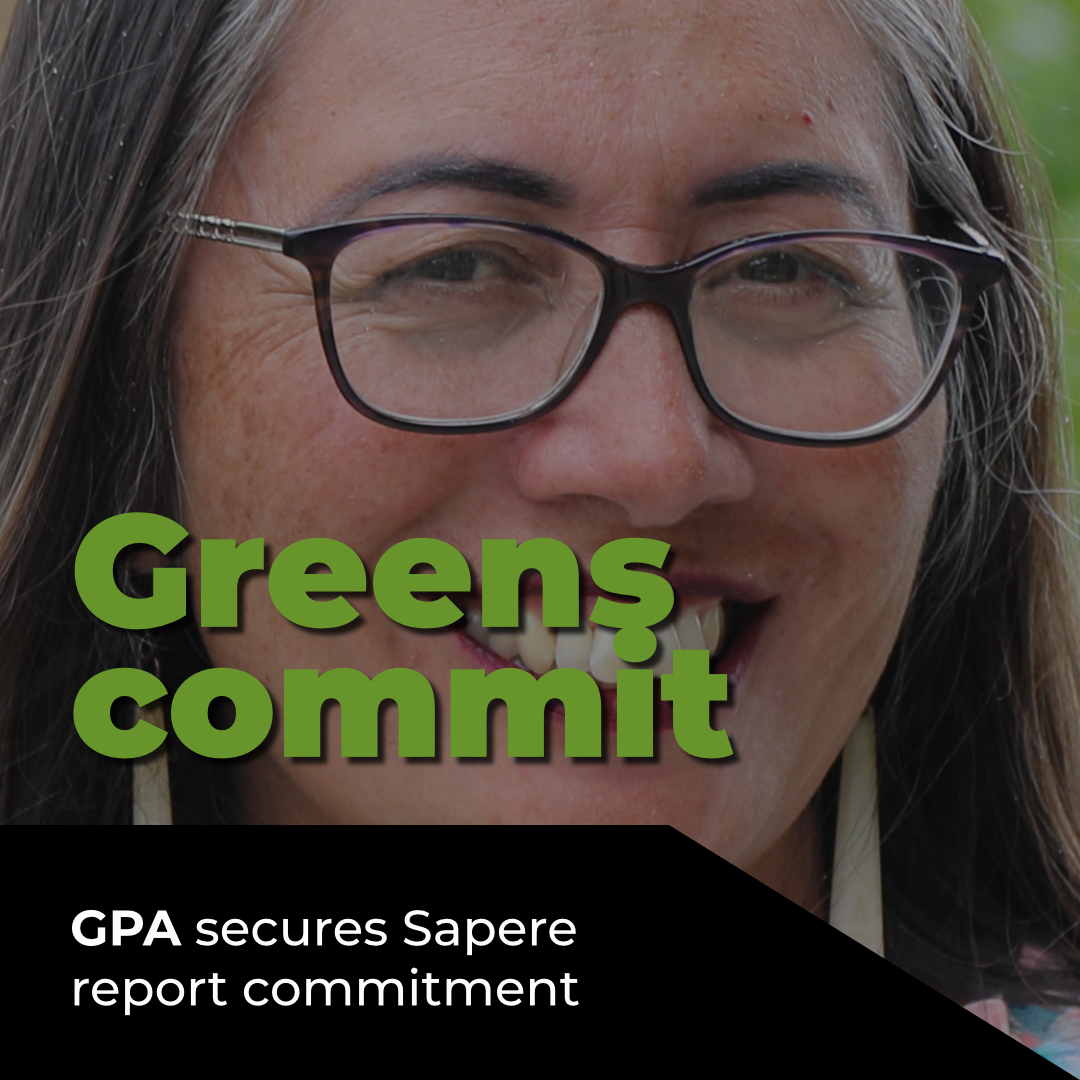
The Green Party has committed to implementing the recommendations of the Sapere report on funding general practice.
The funding increase would be based on the actual cost of delivering care, and would be much larger than what any other party has promised to general practice.
The commitment was in a letter from Greens health spokesperson Hūhana Lyndon, addressed to General Practitioners Aotearoa (GPA) following conversations on the issue of underfunding in the sector.
“This is huge,” says GPA spokesperson Dr Buzz Burrell.
“The only problem is the Greens have fallen into the same trap as other parties in assuming that increasing sector funding will automatically lead to better GP hiring and retention.”
There are not enough GPs in New Zealand.
“When you increase capitation, that money can go to all sorts of places including the health bureaucracy and corporate shareholders’ pockets,” Burrell says.
“We need mechanisms to ensure enough gets to the front lines.”
The Sapere report recommends re-weighting the way the government funds GP clinics through the existing capitation system.
This would distribute funding more equitably to areas that need more access to GPs, and increase overall funding to clinics through the capitation system
The Greens’ letter says the primary care funding crisis affects the whole health sector, “including recruitment and retention or work force, patient access, and people with unmet needs showing up in Emergency Departments instead”.
“It is absolutely right to say that fixing the GP crisis will be a massive boon for the whole country,” Burrell says.
“Every single party is out there trying to keep the health system ship afloat, but they’re not looking at the gaping hole in the bottom: a lack of GPs.”
Capitation funding goes to primary health organisations (PHOs), which distribute it to clinics, which in turn pay GP employees, contractors and owners.
Significantly increasing capitation may lead to better recruitment and retention of GPs, but there is no guarantee.
GPA has been campaigning for policy that would ensure GPs are paid for all hours worked, and a competitive salary that would attract new and overseas doctors to Aotearoa’s general practices.
“This commitment from the Greens falls short of what we’re asking for in that respect,” Burrell says. “We are happy they have committed to implementing the official advice on general practice, but more work is needed.
“We hope to keep working with the Green Party on solutions to the GP crisis, and hope other parties will take up what should be a multilateral call to save our health system.”
The Greens’ letter also committed to updating the Sapere report in 2027, noted the need for long-term planning in the sector, and noted the problem of corporate takeover of clinics.
No political party has committed to ringfencing funds for competitive GP remuneration.
References:
Sapere, A Future Capitation Funding Approach – Addressing health need and sustainability in general practice funding https://www.dpmc.govt.nz/sites/default/files/2022-11/HTU-future-capitation-funding-approach.pdf
Sapere, Rebalancing the scales: Revising capitation weights for primary care funding https://www.health.govt.nz/system/files/2025-10/Briefing-Sapere-report-and-re-weighting-primary-care-capitation-funding-H2024057558.pdf
Green Party, Letter of Reply to General Practitioners Aotearoa https://gpaotearoa.co.nz/wp-content/uploads/2026/11/Green-Party-Letter-of-Reply-to-General-Practitioners-of-Aoteroa.pdf